












Toggl Track vs Clockify: which is better in 2026?

Clockify is the better choice for most teams on cost, and Toggl Track is the better choice on experience. They are closer than they used to be on features: both moved billable rates and invoicing to paid tiers, so the free versions are near-identical in what they withhold. They differ on headcount: Clockify caps the free plan at 5 users, and Toggl, since it merged Track and Plan into one product in 2026, caps it at 3. The split comes after that. Clockify's entry tier is 3.99 dollars per user on annual billing against Toggl Track's 9, which more than halves the cost of crossing the free limit. We prefer Toggl Track's daily tracking workflow, but ease of use is personal. Try both with a typical workday if price alone does not settle the choice.
Toggl Track and Clockify solve a similar problem with different personalities. Toggl Track is the more polished, lighter-feeling option. Clockify is the more utilitarian one, especially when a whole team needs to log time in the same system.
One thing worth clearing up first, because a lot of comparisons still get it wrong: Clockify's free plan is no longer unlimited. It was for years, which is how it built its reputation, but it changed in 2026 and now stops at 5 users. Toggl went further: its free plan is now capped at 3, down from Track's old 5, as part of the merger of Track and Plan. If you chose Clockify specifically for unlimited free seats, that reason has gone, but it still covers two more people than Toggl does.
Toggl Track vs Clockify at a glance
If you only want the headline difference, start here.
| Feature | Toggl Track | Clockify |
|---|---|---|
| Best for | Freelancers and teams that want the easiest tracking experience | Teams that want broad timesheet coverage at a lower cost |
| Core approach | Simple timer-first tracking with light project structure | Team timesheets, tracking, and admin controls on a budget |
| Main strength | Cleaner interface and lower friction day to day | Generous free plan and cheaper paid tiers |
| Learning curve | Low | Low to medium |
| Pricing model | Freemium, then per-user paid plans | Freemium, then lower-cost per-user paid plans |
| Better fit | People who care about simplicity | Teams that care about scale and budget |
Quick verdict: Toggl Track vs Clockify
Toggl Track is easier to like. Clockify is easier to justify on budget. That is the clearest way to frame this comparison.
Choose Toggl Track if:
- You want the cleaner and more focused interface.
- You care more about adoption than squeezing every dollar.
- You do not need a lot of admin controls on day one.
Choose Clockify if:
- You expect to pass the free cap, which is 3 users on Toggl and 5 on Clockify, and want the cheaper upgrade.
- You want lower paid pricing for a larger team.
- You need stronger timesheet and admin coverage than a bare timer.
Choose Timen if:
- You want a simpler workflow than Clockify.
- You want a calendar view that gives more context than Toggl Track.
- You want reports and invoicing without a busier interface.
Key differences between Toggl Track and Clockify
The main difference is that Toggl Track feels designed around the individual person logging time, while Clockify feels designed around a team process. That does not mean Clockify is hard to use. It means the product shows you more of the team-admin side of time tracking earlier.
The second big difference is pricing. Clockify has the more generous free plan and the lower paid entry point, which is a real advantage when you are rolling time tracking out to many people. Toggl Track asks you to pay more for the cleaner experience.
That is why the better tool depends on the job. If adoption is the problem, Toggl Track often wins. If cost and team-wide consistency are the problem, Clockify usually wins.
What is Toggl Track?
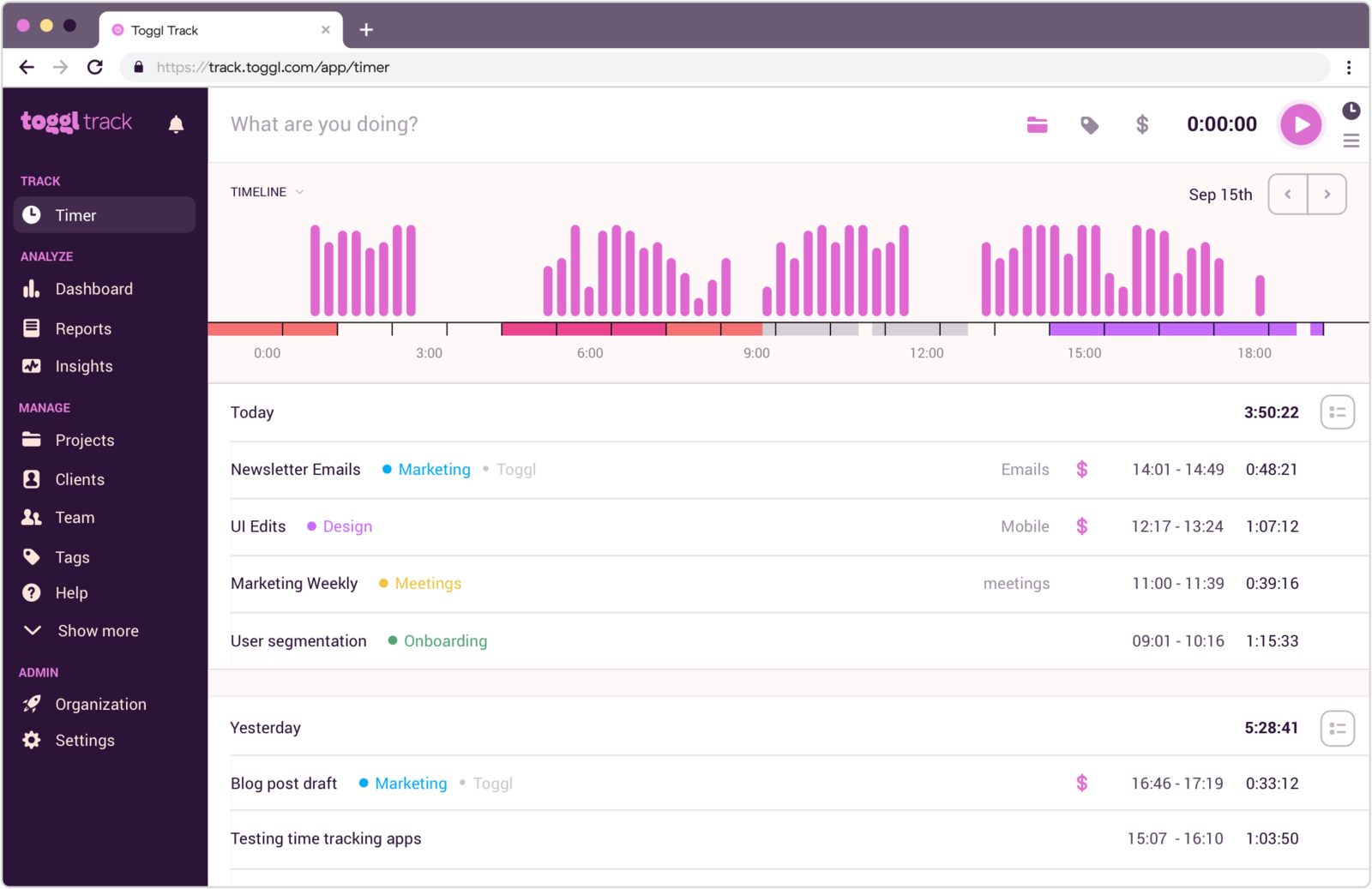
Toggl Track is a time tracking product built to stay out of the way. It is popular because people can usually figure it out without training.
It handles timers, manual entry, reports, reminders, and integrations well. For small teams and freelancers, that is often enough.
The limit is that it stays lighter around admin depth and full team process. If you need more oversight or cheaper scale, you may look elsewhere.
What users say about Toggl Track
Reviews on G2 and Capterra often praise Toggl Track for being easy to start and pleasant to use every day. The usual criticism is that you pay more for that polish and may still need another tool if your workflow gets more operational.
Source: G2 reviews and Capterra reviews
What is Clockify?
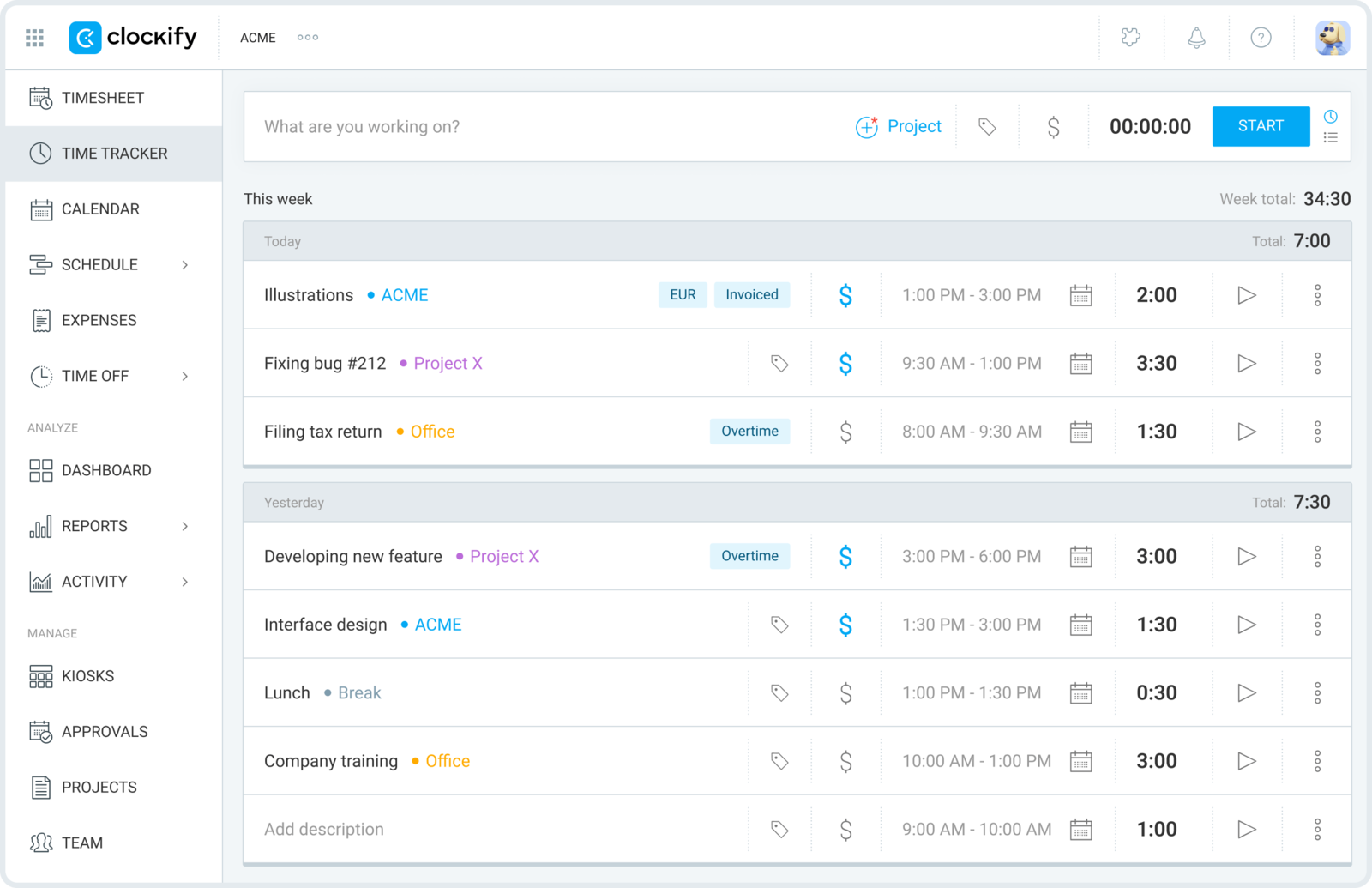
Clockify is a team-friendly time tracking tool with a strong free plan and lower-cost paid tiers. It is common in companies that need many people to track time the same way.
Its value is not only the timer. It also gives you timesheets, approvals, reporting, user roles, and other controls that matter once time tracking becomes a team process.
The tradeoff is that Clockify can feel more utilitarian. It is practical, but it does not feel as light or as polished as Toggl Track.
What users say about Clockify
Reviews on G2 and Capterra usually describe Clockify as great value and especially strong for teams that need broad timesheet coverage. The most common complaints are around interface clutter and parts of the experience feeling less refined than more design-led competitors.
Source: G2 reviews and Capterra reviews
Toggl Track vs Clockify features
The overlap is real. Both tools handle timers, manual entries, reports, and integrations. The difference is depth around team administration and workflow.
| Area | Toggl Track | Clockify |
|---|---|---|
| Task management | Light structure around projects, clients, and tags | Light structure plus stronger team controls and approvals |
| Project views | Simple project lists and reports | Timesheets, dashboards, reports, and admin-friendly views |
| Automation | Reminders and idle detection | More workflow around approvals, schedules, and tracking policies |
| Reporting | Strong filtered reports and exports | Strong reports with broader team coverage |
| Communication | Minimal built-in collaboration | Also minimal, but better for admin oversight |
| Integrations | Broad integration ecosystem | Broad integration ecosystem |
If you want the nicer everyday experience, Toggl Track wins. If you want more team-wide control without paying much, Clockify wins, especially for small teams watching budget and rollout risk.
That is why these tools often get compared so often. They solve a similar problem, but one is clearly more comfort-first while the other is more scale-first.
Toggl Track vs Clockify pricing
| Plan detail | Toggl Track | Clockify |
|---|---|---|
| Free plan | Up to 3 users | Up to 5 users |
| Billable rates on free | No | No |
| Invoicing on free | No | No |
| Entry paid plan | Starter, $9 per user/month | Basic, $3.99 per user/month billed annually, or $4.99 monthly |
| Cheapest plan with invoicing | Starter, $9 per user/month | Standard, $5.49 per user/month billed annually, or $6.99 monthly |
| Higher paid plan | Premium, $14 per user/month for the first year on annual billing, then $18 | Pro, $7.99 per user/month billed annually, or $9.99 monthly |
| Cost for a 6-person team | $54 per month on Starter | $23.94 per month on Basic |
| Best budget fit | Small teams that care most about the experience | Teams that want to keep per-user cost down |
Clockify is the clear budget choice, and the gap opened further when Toggl cut its free cap to 3. A new four-person team pays 36 dollars a month on Toggl Starter with annual billing and nothing on Clockify; a six-person team pays 54 on Toggl and about 24 on Clockify, and that gap widens with every hire. For client billing, compare the required plans: rates arrive at Basic, but invoicing does not appear until Standard, so a team that bills clients is comparing 5.49 against 9 rather than 3.99 against 9. Both gate spreadsheet export behind paid plans, and the Toggl export routes and Clockify export limits pages cover what each free plan will and will not give you.
Toggl's Premium is 16 dollars per user per month on annual billing and 24 monthly on the merged product, and it now carries the planning and capacity features as well as approvals and profitability. Existing Track users should check their own plan and renewal terms separately from the new public pricing.
Toggl Track still earns its place when the nicer experience drives better adoption. A tracker people actually use is worth more than a cheaper one they forget. If you want the detail on where each free plan stops, the Toggl Track free plan breaks down exactly which features sit behind the paywall.
Toggl Track vs Clockify ease of use
Toggl Track is easier for most people to enjoy. It is one of those products that tends to feel obvious quickly, which helps when time tracking already feels like an annoying job to begin with.
Clockify is still easy enough, but it feels more like a team system. If you need that structure, it is a strength. If you do not, Toggl Track usually feels better.
Toggl Track pros and cons
Toggl Track pros
- Cleaner and more focused interface.
- Very easy to learn.
- Strong reports and integrations.
- Low daily friction.
Toggl Track cons
- Free plan is smaller than Clockify's.
- Paid plans cost more.
- Less team-admin depth.
- May feel light for larger operations.
Toggl Track is worth paying for when ease of use is the biggest decision factor.
Clockify pros and cons
Clockify pros
- Free plan is excellent for bigger teams.
- Paid plans start lower.
- Good timesheet and admin coverage.
- Works well for consistent team rollout.
Clockify cons
- Interface feels busier than Toggl Track.
- Day-to-day experience feels more utilitarian.
- Not as polished visually.
- Can feel heavier than needed for very small teams.
Clockify is the more practical choice when budget and scale matter more than polish.
Timen as an alternative
Timen makes sense if you want a simpler workflow than Clockify but also want more context around your time than a very minimal tracker gives you. It keeps the daily flow light while adding a calendar view, clear reports, and invoicing.
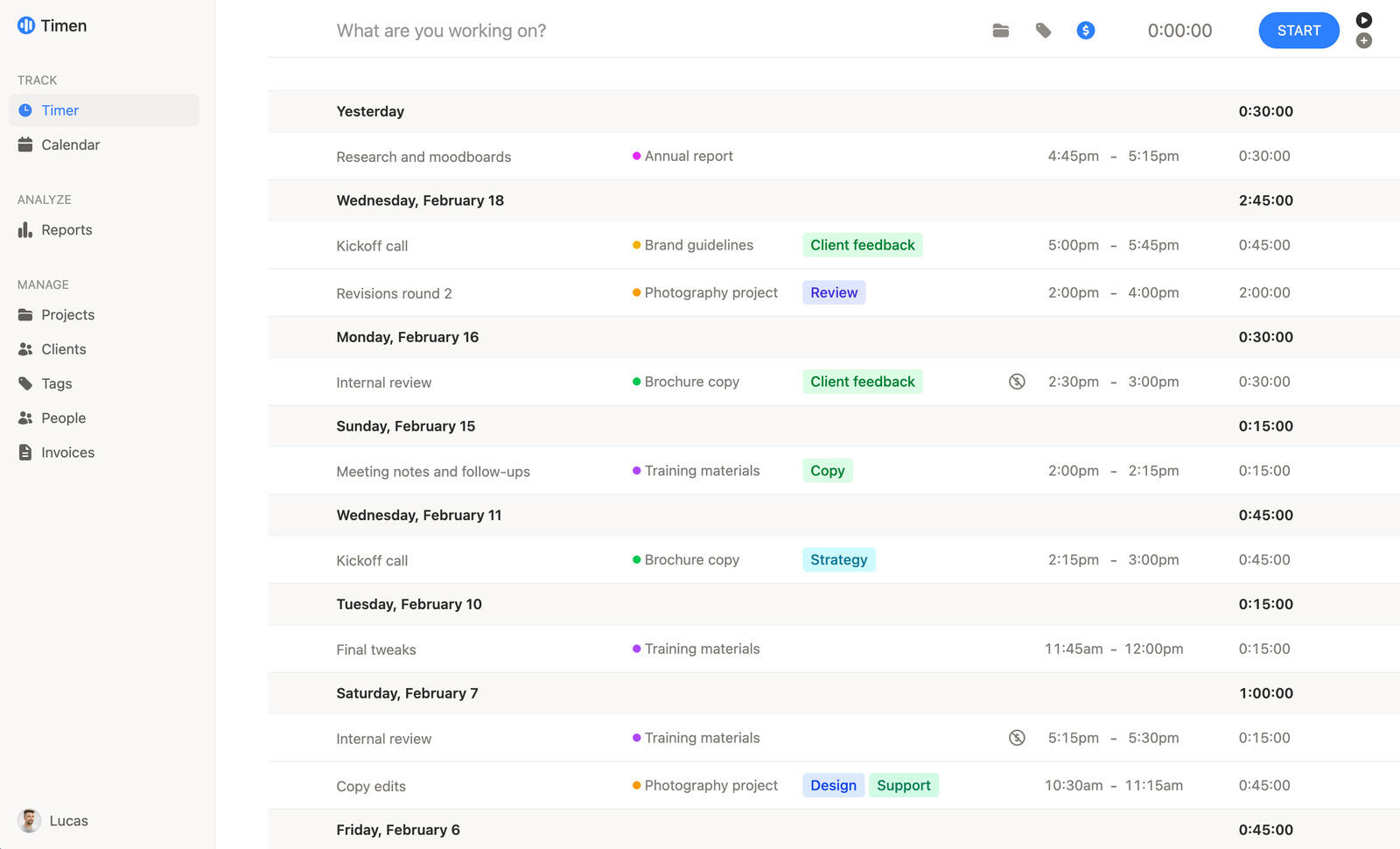
That makes it a useful middle option for small teams, agencies, and consultants that want time tracking to stay calm and easy to review. It does not try to be an admin-heavy workforce tool, and it does not expect you to piece billing together elsewhere, even if a familiar timer workflow still matters.
Pricing is also easier to understand. If you are tired of comparing multiple add-on style plans, Timen feels more straightforward.
If Toggl Track is still your reference point, it is worth reading Toggl Track vs Harvest for a billing-focused comparison and Toggl Track vs Timely if automatic capture is also on your list. If you are trying to move away from the same habits entirely, moving to a simpler workflow is the better next read. If you want the direct Timen tradeoff, use Timen vs Toggl Track.
You can also review the best Toggl Track alternatives, the best Clockify alternatives, compare the simpler all-in-one option in Timen vs Clockify, or browse more compare articles if you want a wider shortlist.
Which tool should you choose?
Choose Toggl Track if:
- You care most about the smoothest tracking experience.
- You want the tool people are least likely to resist.
- You are okay paying a bit more for a cleaner product.
Choose Clockify if:
- You expect to pass the free cap, which is 3 users on Toggl and 5 on Clockify, and want the cheaper upgrade.
- You want the lower-cost paid option.
- You need more team-wide timesheet structure.
Choose Timen if:
- You want simple tracking and easier review in calendar form.
- You want reports and invoices without a busier interface.
- You want a lighter tool that still feels complete for everyday work.
If you want the nicest tracking experience, choose Toggl Track. If you want the lowest-friction budget decision for a team, choose Clockify. If you want a simpler middle ground, choose Timen.
FAQ
Here are the most common questions people ask when comparing Toggl Track and Clockify.
- Is Toggl Track better than Clockify?
- Toggl Track is usually better if simplicity and product feel matter most. Clockify is usually better if cost and team scale matter most.
- Which tool is easier to use, Toggl Track or Clockify?
- Toggl Track is easier for most teams because the interface is lighter. Clockify is still approachable, but it feels more administrative.
- Which tool is cheaper, Toggl Track or Clockify?
- Clockify is usually cheaper, especially once your team grows. Toggl Track costs more, but some teams prefer the cleaner experience enough to justify it.
- Is there a simpler alternative to Toggl Track and Clockify?
- Timen is a simpler alternative if you want fast tracking, a calendar view, reports, and invoicing without extra clutter.