












Timen vs Hubstaff: which tool is better?
Choose Timen if you want a straightforward, trust-based tracking workflow with reporting and invoicing built in. Choose Hubstaff if your team needs monitoring, scheduling, payroll-adjacent workflows, or more operational visibility into remote work.
Timen and Hubstaff are not really chasing the same buyer. Timen is built for teams that want accurate direct tracking without turning the product into a management system. Hubstaff is built for teams that want time tracking to support workforce operations, attendance, accountability, and more direct oversight.
That makes this a values and workflow decision as much as a feature decision. If the team wants clarity without feeling watched, Timen is usually the better fit. If the team wants stronger controls and more visibility into remote execution, Hubstaff is often the better fit.
Which is better: Timen or Hubstaff?
Timen is better for teams that want a lighter, trust-based tracking workflow people will actually accept. Hubstaff is better for remote organizations that need monitoring, attendance, scheduling, or payroll-adjacent control.
Choose Timen if cleaner habits matter more than oversight. Choose Hubstaff if workforce visibility is the reason you are buying the tool.
Quick decision
Choose Timen if:
- You want contributors to track time without a monitoring-heavy experience.
- You want calendar review, reports, and invoicing in one lighter workflow.
- You value trust, simplicity, and lower day-to-day friction more than oversight features.
Choose Hubstaff if:
- You need scheduling, payroll support, attendance, or activity visibility for remote teams.
- You want time tracking to support operational control, not just reporting.
- You are comfortable with a product that can feel more management-led than contributor-led.
Biggest difference: Timen is built around a calmer tracking habit, while Hubstaff is built around workforce visibility and operational control.
At a glance: Timen vs Hubstaff
This table will tell you quickly whether you are choosing a tracker or a management system with tracking at its core.
| Category | Timen | Hubstaff |
|---|---|---|
| Best for | Trust-based teams that want simple tracking plus follow-through | Remote teams that need management visibility and structure |
| Core approach | Direct tracking, review, reporting, and invoicing | Time tracking tied to monitoring, scheduling, and payroll workflows |
| Main strength | Cleaner contributor experience | Operational depth for remote team oversight |
| Main tradeoff | Not designed for heavy workforce monitoring | Can feel intrusive or too management-heavy |
| Better fit | Teams that care about acceptance and clarity | Teams that care about oversight and structure |
Do you actually need monitoring and visibility features?
Hubstaff is better for teams that truly need monitoring and visibility. Its value comes from turning time tracking into a broader remote-operations tool for attendance, scheduling, payroll, and work visibility.
Timen is better for teams that do not need that operational layer. In that case Hubstaff's strength becomes extra weight, while Timen gives the team a tool they are more likely to accept and use consistently without adding the feeling of being monitored.
Which tool is easier for contributors to live with?
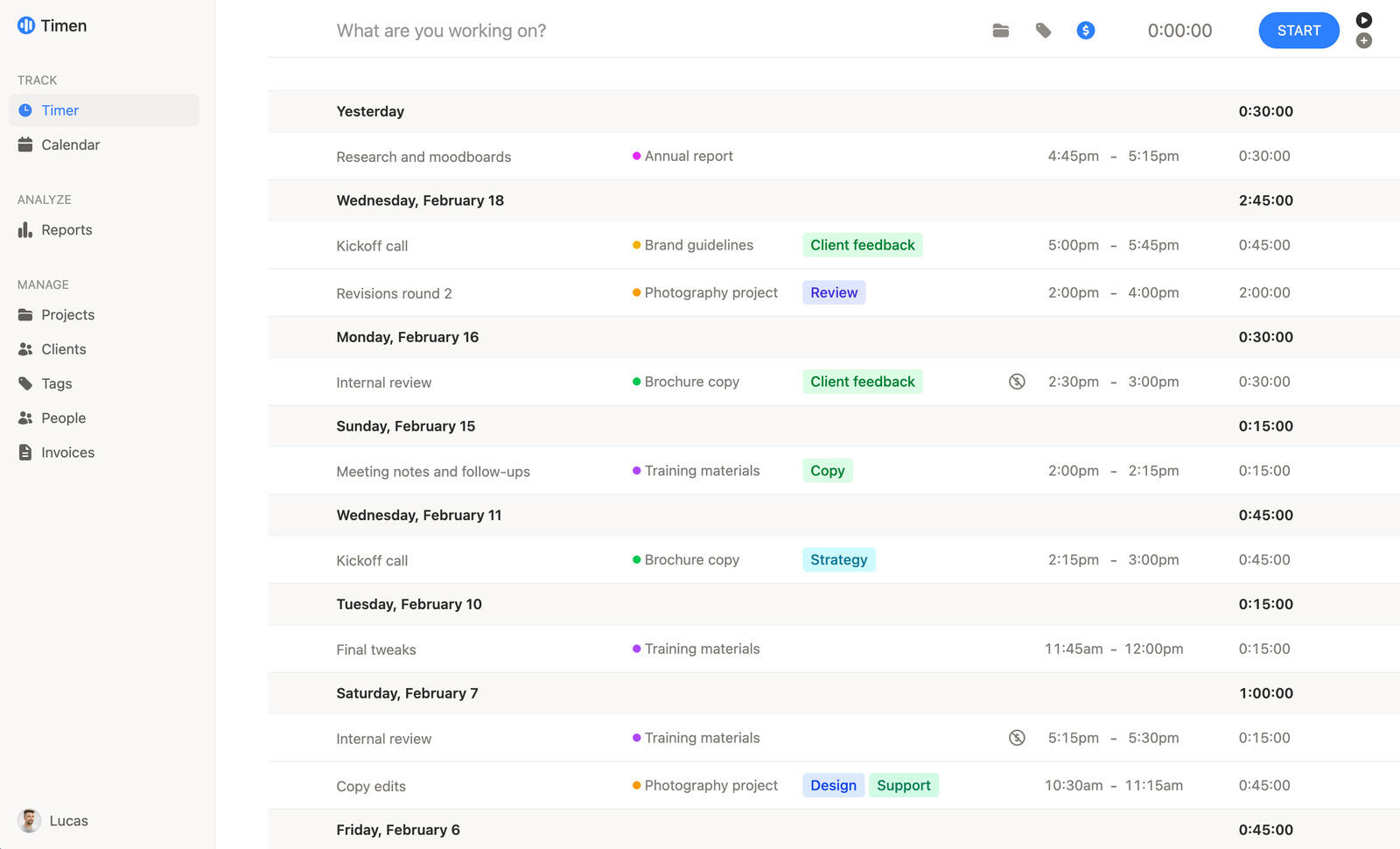
Timen is better for most contributors because the workflow stays focused on logging, reviewing time in context, and reporting time. Hubstaff becomes easier only in organizations where the added structure is expected and accepted as part of the job.
That difference matters more than buyers sometimes expect. A tool that feels intrusive can create bad habits, shallow compliance, or resentment even if the feature list is impressive. A tool that feels lighter is often the one teams keep using accurately.
When is Hubstaff worth the extra operational weight?
Hubstaff is better when time tracking sits inside a larger workforce workflow. That includes remote operations, staffing, attendance, shift coordination, payroll support, and accountability requirements that go beyond project reporting.
Timen is better when the team mainly needs accurate time, weekly review, clear reports, and invoice-ready outputs. If that is the job, Hubstaff often solves a bigger problem than the team actually has.
A small distributed consultancy is a good example. If the real need is just to understand hours and bill clients, Timen is usually enough and easier to accept. If the real need is verifying when people worked, how time was spent, and how that feeds scheduling or payroll, Hubstaff makes more sense.
How does pricing compare?
Hubstaff's pricing depends on whether you actually need the operational layers attached to the lower and mid-tier plans. Timen is completely free for everyone, which keeps the buying logic simple because the whole workflow is already included at no cost.
| Pricing point | Timen | Hubstaff |
|---|---|---|
| Free plan / trial | Free for everyone | Trial available |
| Next pricing level | Free — all features included | Starter at $4 per seat/month on Hubstaff's pricing page |
| Upgrade trigger | None — every feature is already included for free | Moving into Grow at $7 or Team at $10 for more reporting, payments, and integrations |
| Best budget fit | Teams that want everything free and less tool sprawl | Teams that truly need operations features tied to time tracking |
The budget question here is really a scope question. If you need Hubstaff's operational depth, that extra structure may be worth it. If you do not, Timen often creates better value because the cleaner workflow is completely free, not part of a bigger operational system.
Strengths and tradeoffs
This matchup forces a clear choice between a calmer workflow and stronger workforce controls.
Timen
- Simple, trust-based tracking experience.
- Review, reports, and invoicing stay in the same workflow.
- Better fit when adoption and acceptance matter most.
Main tradeoff: Timen is the weaker fit if your team needs scheduling, payroll support, attendance logic, or explicit activity visibility as part of the buying requirement.
Hubstaff
- Strong remote operations feature set.
- Clearer fit for oversight, scheduling, and workforce workflows.
- Lower entry price if operations features are the reason you are buying.
Main tradeoff: Hubstaff is the weaker fit if the team mainly wants a tracker people will use willingly, because the extra structure can feel intrusive or heavier than necessary.
Common questions about Timen vs Hubstaff
These are the questions that usually decide whether Hubstaff's operational depth is worth it.
- Is Timen better than Hubstaff?
- Timen is better for teams that want accurate time tracking without monitoring-heavy workflows. Hubstaff is better for teams that need remote operations, scheduling, payroll support, or management visibility.
- Which tool is easier to use, Timen or Hubstaff?
- Timen is easier for most contributors because it feels lighter. Hubstaff only feels easier when the organization already expects stronger oversight and structure.
- Which tool is cheaper, Timen or Hubstaff?
- Hubstaff starts lower with Starter at $4 per seat on its pricing page. Timen is completely free, with all features included, so you get the full workflow without moving through multiple operational tiers.
- Should a remote team choose Timen or Hubstaff?
- Choose Hubstaff if the remote team needs visibility, scheduling, attendance, or payroll support. Choose Timen if the remote team mainly needs trustworthy time tracking and a product people will accept.
Final decision
Choose Timen if you want a simpler, more trust-based time tracking workflow that still covers review, reporting, and invoicing. Choose Hubstaff if time tracking is only part of a larger workforce-operations problem you need the tool to solve. The better product depends on whether you need cleaner habits or stronger oversight.
For more context inside the Timen cluster, compare Timen vs Clockify, see the client-billing contrast in Timen vs Harvest, or look at Timen's reports workflow.
Try Timen if your team wants fewer controls, less friction, and a more accepted tracking routine.