












Timen vs Timely: which tool is better?
Choose Timen if you want direct tracking, clear review, reports, and invoicing without passive capture. Choose Timely if the real problem is forgotten timers and you want automatic activity memory to help rebuild the day later.
Timen and Timely sit on opposite sides of the time-tracking habit problem. Timen assumes it is better to keep the workflow direct and easy enough that people will use it consistently. Timely assumes many people will never keep that habit well enough, so the product should capture activity in the background and let them turn it into time entries later.
That is why this is not just a feature comparison. It is a workflow philosophy comparison. If your team wants explicit tracking that stays simple, Timen usually fits better. If your team hates timers and regularly loses billable time because people forget them, Timely often has the stronger case.
Which is better: Timen or Timely?
Timen is better for teams that want explicit time tracking, lighter review, and clearer follow-through after the timer stops. Timely is better for teams that routinely miss hours because they forget timers and need automatic capture to reconstruct the day.
Choose Timen if simplicity means less process. Choose Timely if simplicity means less reliance on memory.
Quick decision
Choose Timen if:
- You want an explicit time-tracking workflow that people can understand quickly.
- You want calendar review, reports, and invoicing without adding passive capture complexity.
- You prefer direct control over your time data instead of reconstructing it later.
Choose Timely if:
- You regularly miss time because people forget to start timers.
- You want automatic capture to help rebuild the day after the fact.
- You are comfortable reviewing and cleaning captured activity before it becomes final time.
Biggest difference: Timen keeps tracking explicit and simple, while Timely reduces forgotten timers by moving more of the work into automatic capture and later review.
At a glance: Timen vs Timely
Use this table if your real question is whether simplicity should come from a lighter workflow or from less reliance on memory.
| Category | Timen | Timely |
|---|---|---|
| Best for | Teams that want explicit, lightweight tracking | Teams that miss time because they forget timers |
| Core approach | Direct tracking plus review, reports, and invoicing | Automatic memory capture with later review |
| Main strength | Clear and predictable workflow | Less missed time from forgotten timers |
| Main tradeoff | Still depends on users logging time directly | Heavier review step and more process complexity |
| Better fit | Consultants, freelancers, and small client teams | Fragmented workdays spread across many apps |
Do you want explicit tracking or automatic capture?
This is the decision. Timen is better for teams that want people to log time through explicit tracking and understand exactly what is happening. Timely is better for teams that believe the bigger problem is human memory and the tool should reconstruct the day for you.
Neither answer is universally right. Teams with strong habits often prefer explicit tracking because it is faster, clearer, and easier to trust. Teams with fragmented schedules, frequent context switching, or poor timer discipline often prefer Timely because recovered hours can justify the heavier process.
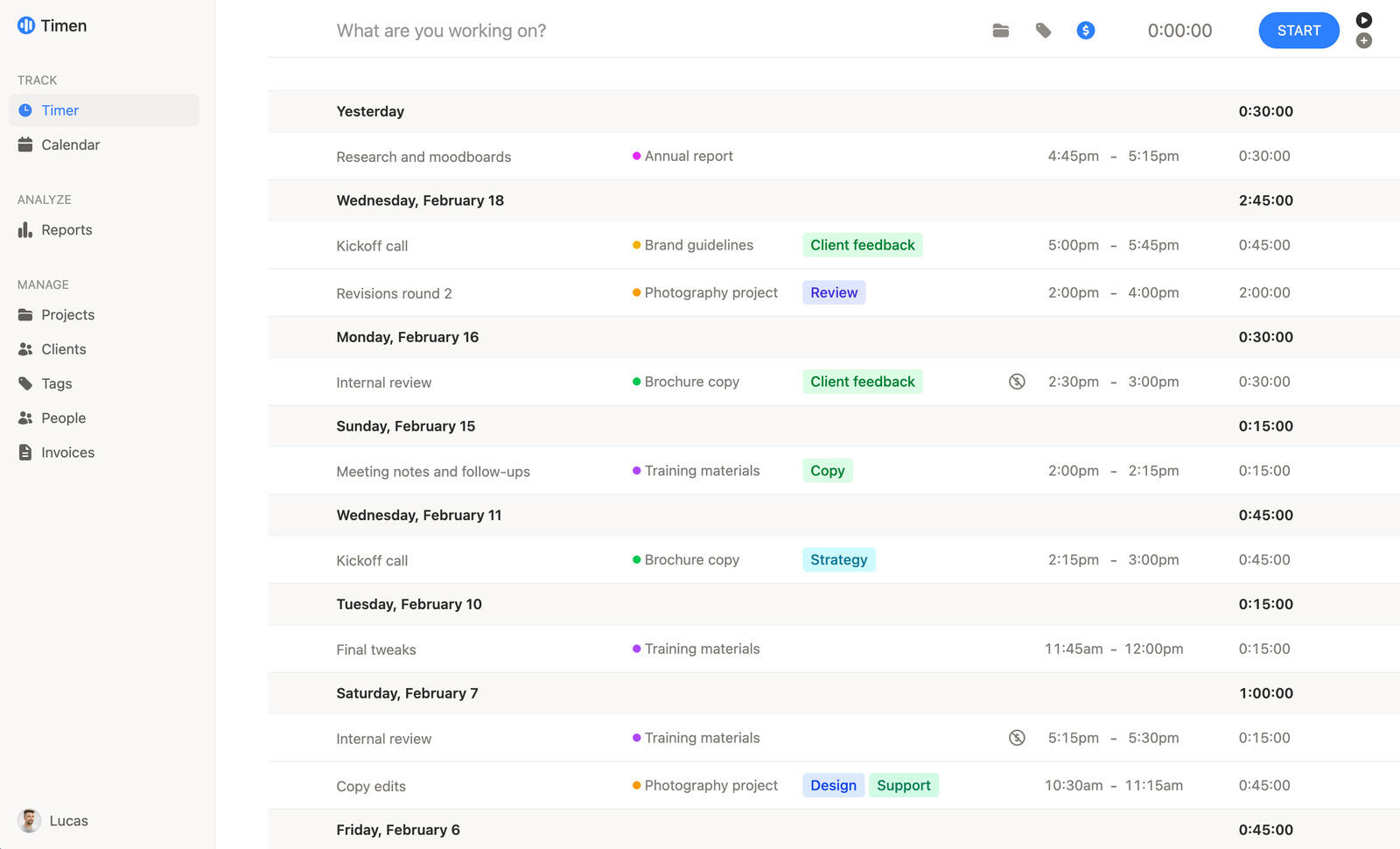
Which review workflow is easier in practice?
Timen is better for teams that want the review step to stay light. Timely is better for teams that are willing to review more because that extra review saves hours that would otherwise be missed.
That distinction matters in client work. A consultant who usually remembers to track time but wants a cleaner weekly review will often find Timen easier. A consultant who constantly forgets timers across meetings, email, research, and deep work may still prefer Timely because some review is better than losing the hours entirely.
Who should choose Timen and who should choose Timely?
Timen is better for freelancers, consultants, and small teams that want an explicit workflow they can learn quickly, trust easily, and turn into clear reporting. Timely is better for teams whose main failure mode is missed time and who are willing to accept a heavier review routine to solve it.
This is one of the clearest fit questions in the market. If your team does not actually have a timer-discipline problem, Timely can feel like more product than you need. If your team does have that problem, Timely can save hours that a manual-first product never catches.
How does pricing compare?
The economic logic is very different. Timen is completely free for everyone, with a simple all-features workflow and invoice-ready follow-through. Timely sells automation that only pays off when forgotten time is expensive enough to matter.
| Pricing point | Timen | Timely |
|---|---|---|
| Free plan / trial | Free for everyone | No free plan |
| Next pricing level | Free — all features included | Starter from $9 per user/month billed annually |
| Upgrade trigger | None — every feature is already included for free | Moving into Premium at $16 or Unlimited at $22 for broader planning and team needs |
| Best budget fit | Teams that want free access and an explicit workflow | Teams that lose enough time to justify automatic capture |
The key buyer question is not the price tag. It is whether automatic capture saves enough missed time to earn its weight. If that answer is no, Timen is usually the cleaner value. If that answer is yes, Timely can pay for itself.
Strengths and tradeoffs
This comparison is about whether the tool should reduce forgotten time or keep the whole workflow easier to understand.
Timen
- Direct, explicit workflow that stays easy to trust.
- Calendar review, reports, and invoicing are built in.
- Better fit for teams that want less process overhead.
Main tradeoff: Timen is the weaker fit if the team consistently forgets timers and needs the product to reconstruct the day automatically.
Timely
- Very strong for recovering time people forget to track.
- Polished automatic-capture experience.
- Useful for fragmented work spread across many apps.
Main tradeoff: Timely is the weaker fit if your team wants the workflow to stay explicit, light, and easy to understand without an extra review layer.
Common questions about Timen vs Timely
These are the questions that usually settle the automatic-tracking debate.
- Is Timen better than Timely?
- Timen is better when you want direct, understandable time tracking with less process weight. Timely is better when missed time from forgotten timers is the problem you are really trying to solve.
- Which tool is easier to use, Timen or Timely?
- Timen is easier if you prefer explicit logging. Timely can feel easier for people who hate timers, but it replaces timer discipline with a review workflow.
- Which tool is cheaper, Timen or Timely?
- Timen is completely free, with all features included. Timely starts at $9 annually, has no free option, and costs more as teams expand the automation workflow.
- Should a consulting team choose Timen or Timely?
- Choose Timely if the consulting team routinely misses hours because people forget to track. Choose Timen if the team wants a simpler explicit workflow with clear review and invoicing.
Final decision
Choose Timen if you want simple, explicit tracking and a clearer workflow after the timer stops. Choose Timely if your team loses too much time to forgotten tracking and needs automatic capture to recover it. The better tool depends on whether simplicity means less process or less reliance on memory.
If you want more context inside the Timen cluster, compare Timen vs Toggl Track, see the budget-first alternative in Timen vs Clockify, or look at Timen's calendar review workflow.
Try Timen if your team wants time tracking to stay explicit, calm, and easy to review without leaning on passive capture.